Free consultation
A full treatment plan and every question answered — at no cost.
$250 value
Full‑arch dental implants in Georgetown, placed by Dr. Lucy Belcher — a board‑certified periodontist with 6+ years of specialist experience in implants and gum care. Premium zirconia, IV sedation included, and same‑day teeth. This May only, save $700 to $6,000 on treatment.
Everything you need to make a confident decision — plus a voucher you'll only find on this page. Take the quiz by the end of May to lock it in.
A full treatment plan and every question answered — at no cost.
Online‑only voucher applied to any treatment plan, varying with your case.
Same imaging we'd use to plan your surgery — confirms candidacy in minutes.
Limited to one per patient. New patients only. Not combinable with any other discounts, offers, or insurance. Must be claimed through this website to apply.
No pressure. Locked‑in pricing on every plan.
Patients across Central Kentucky trust Georgetown Periodontics for their implant care, led by Dr. Lucy Belcher — a board‑certified periodontist with years of specialty training in implants and gum health. We pair premium materials and honest pricing with the time to explain every option, so you can make a confident, informed decision.
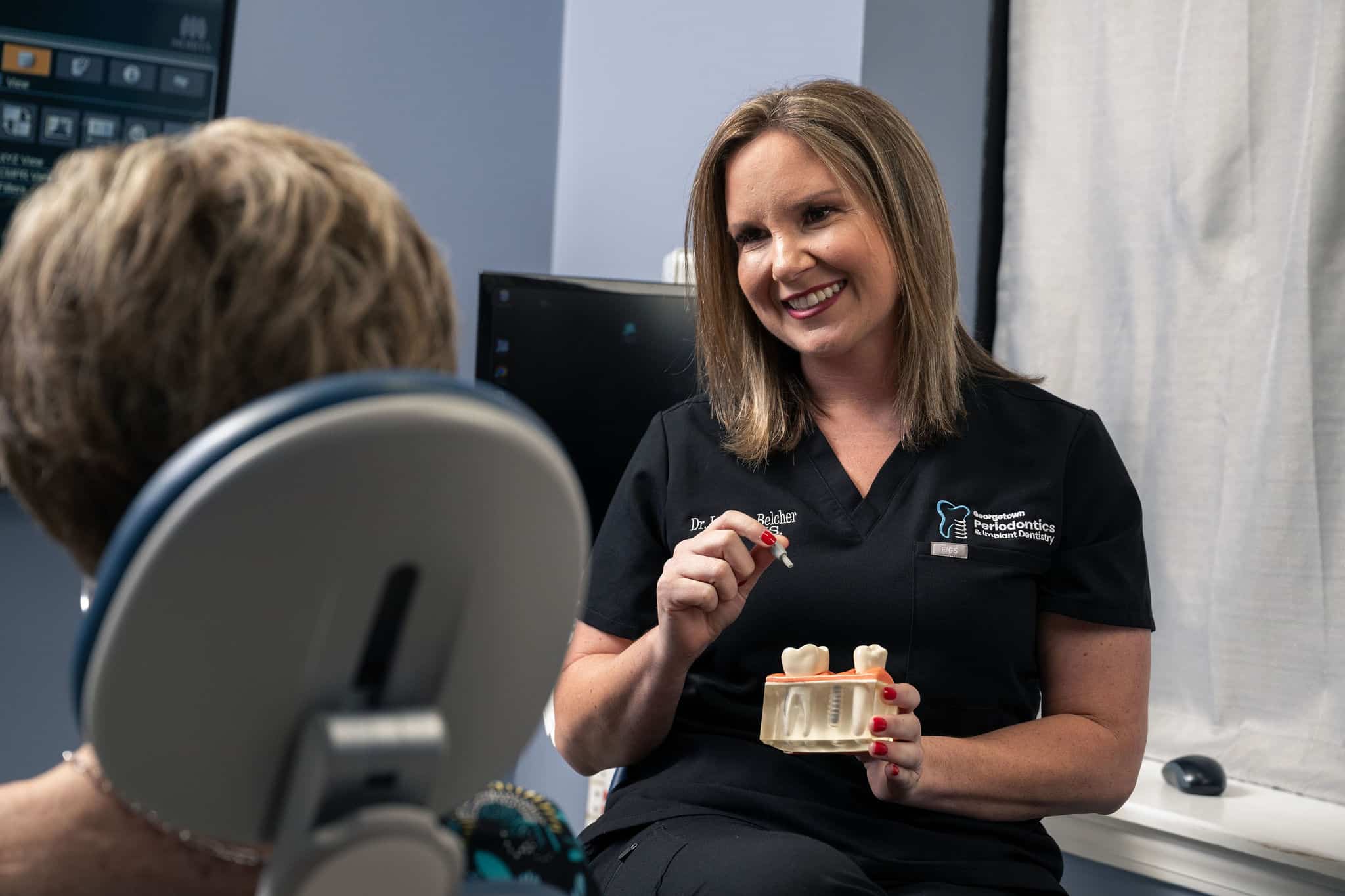
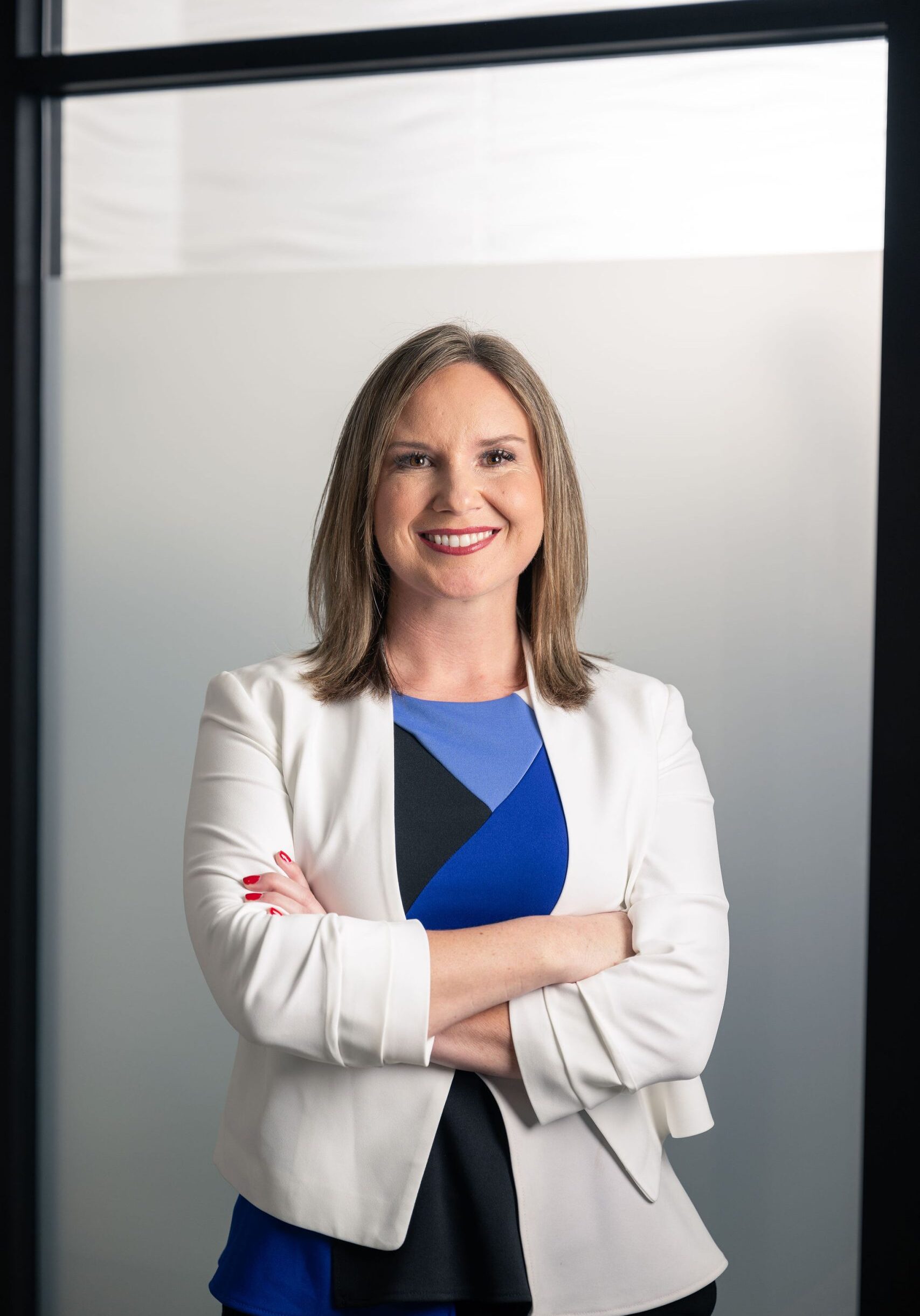
"I take time to explain every treatment option — including risks, benefits, and alternatives — so patients can make confident, informed decisions."
Three reasons Georgetown Periodontics is the right place for your full‑arch case.
Dr. Belcher completed three years of advanced specialty training beyond dental school — focused entirely on periodontics and implant dentistry. Implants don't live in your teeth; they live in your gums and bone. A periodontist is the specialist who understands both.
We don't do fillings, crowns, cleanings, or Invisalign. Our entire practice is built around periodontal health and dental implants. That focus means every piece of equipment, every team member, and every workflow is tuned to get full‑arch cases right the first time.
The packages shown here are all‑inclusive for most patients — implants, extractions, bone grafts, provisional, final prosthesis, and IV sedation. If your case needs something different (or you'd like to upgrade to CRNA‑administered general anesthesia to be fully asleep), you'll receive a full, itemized treatment plan during your free consultation — before you commit to anything.
Premium zirconia, titanium implant systems, and IV sedation included on every case — from a periodontist who's trained for exactly this work. When we quote you a price, that's the price.
IV sedation comes standard on every full‑arch case. You'll feel deeply relaxed and drowsy, and most patients have little or no memory of the procedure — it feels like a comfortable nap. If you'd rather be fully unconscious, a licensed CRNA can administer general anesthesia for an additional $3,000.
Maybe you've avoided photos, foods you used to love, laughing out loud. Maybe you've put it off, only to be reminded again. You're not alone — and you're at the right place. Implants replace the root, not just the tooth — and they're built to last a lifetime.
This office and staff are amazing! They all work in tandem like a well oiled machine. I was not nervous one bit! Dr. Belcher did a phenomenal job with my extraction and bone grafting in preparation for an implant. She was so sweet and communicative of the procedure and what it would entail. They were all so compassionate, sweet and calm. The office has a soothing atmosphere as well. I just can't compliment them enough! They were perfect!
I could not recommend Dr. Lucy Belcher & her amazing team enough! You can tell they truly care about their patients.
Huge thanks goes out to this team of wonderful people. My permanent crown went bad after only a year when going somewhere else. I was referred here by a co‑worker. I realized not only have they taken such wonderful care of me — they also have taken care of me for just over a third of the cost. So glad the universe pulled me to this office; I cannot thank y'all enough!
Every step during the process, every person from the front desk to the assistants to the Doctor were very professional, thorough and pleasant. Would highly recommend and will be going back for another implant I'll be needing.
Many offices would have you drive in just to find out what treatment costs, or give a suspiciously low price online only to add on extra fees later on. We believe in full transparency instead — every option below shows exactly what's included, down to the last implant, graft, and sedation option. No surprises. No hidden fees. Our prices are fair, and inclusive of everything you need for your new smile.
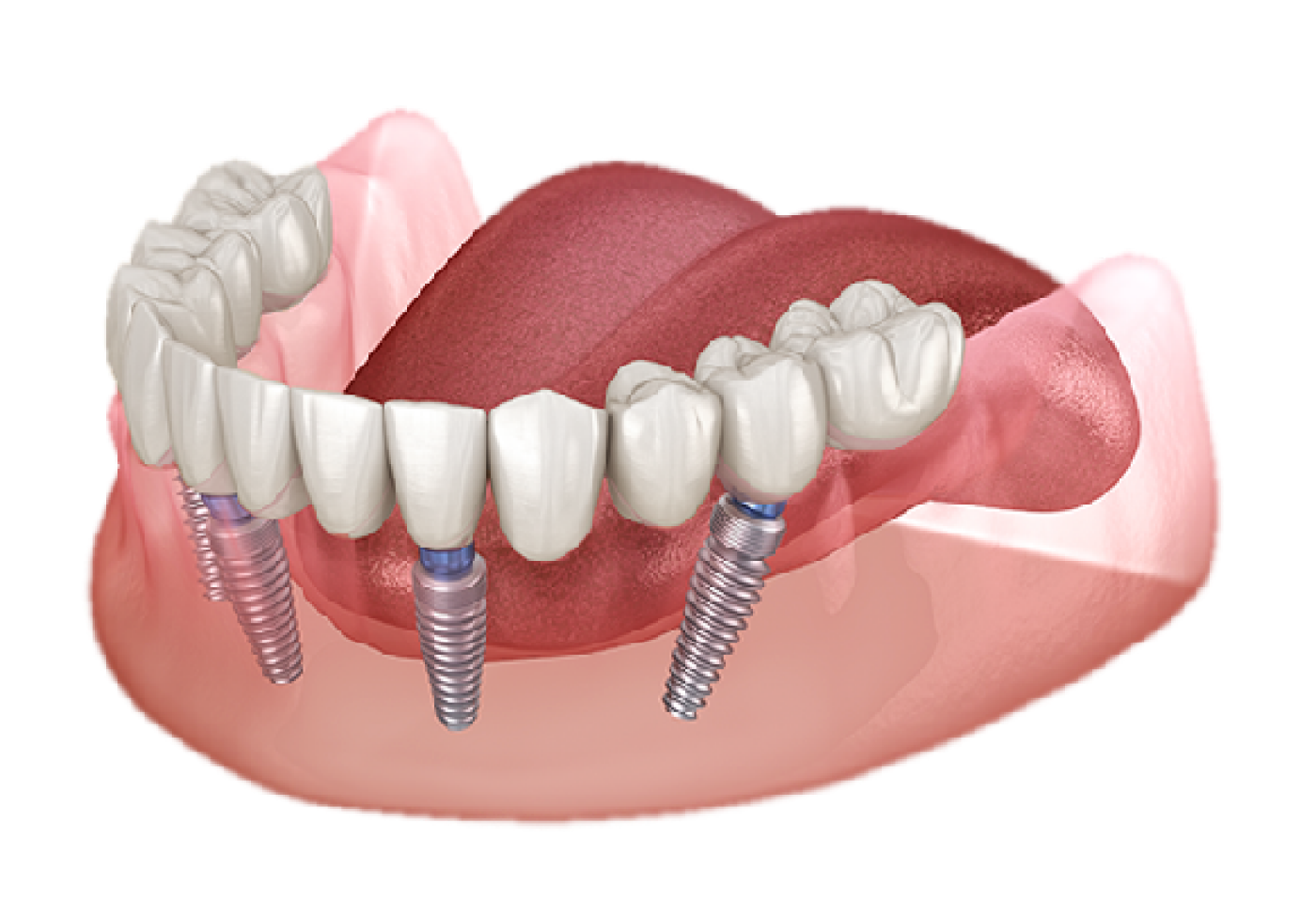
A beautiful, fully fixed new smile today — designed to last 1–3 years and upgradeable to lifetime zirconia whenever you're ready.

A permanently fixed full‑arch solution in the strongest material available — chip and stain resistant, built to last a lifetime.

A full‑mouth restoration that doesn't chip or stain — the most complete solution available, built with lifetime durability.
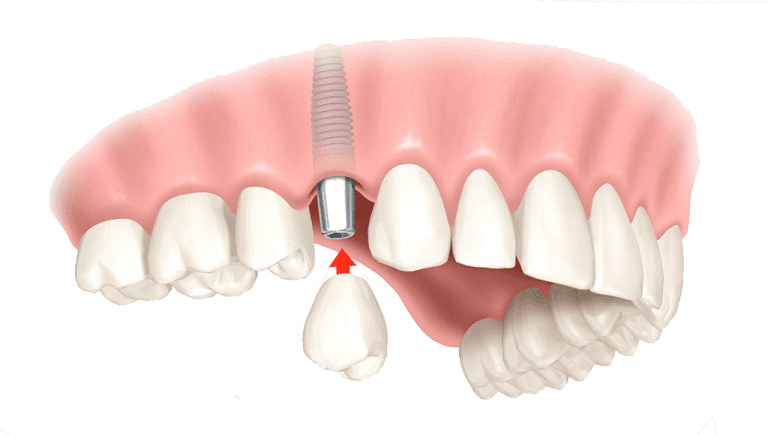
Replacing just one tooth — or a few? Every implant is placed by Dr. Belcher, a board‑certified periodontist, with a customized treatment plan and final price given at your free consultation.
Not sure what you need, or need something else? Every patient is unique. Click below, select "I'm not sure what I need" on the form, and a patient coordinator will help you navigate the best plan for your situation.
Talk to a coordinator →Treatment fits your monthly budget — not your savings account. We partner with three of the most trusted dental financing providers so you can start sooner, not later.



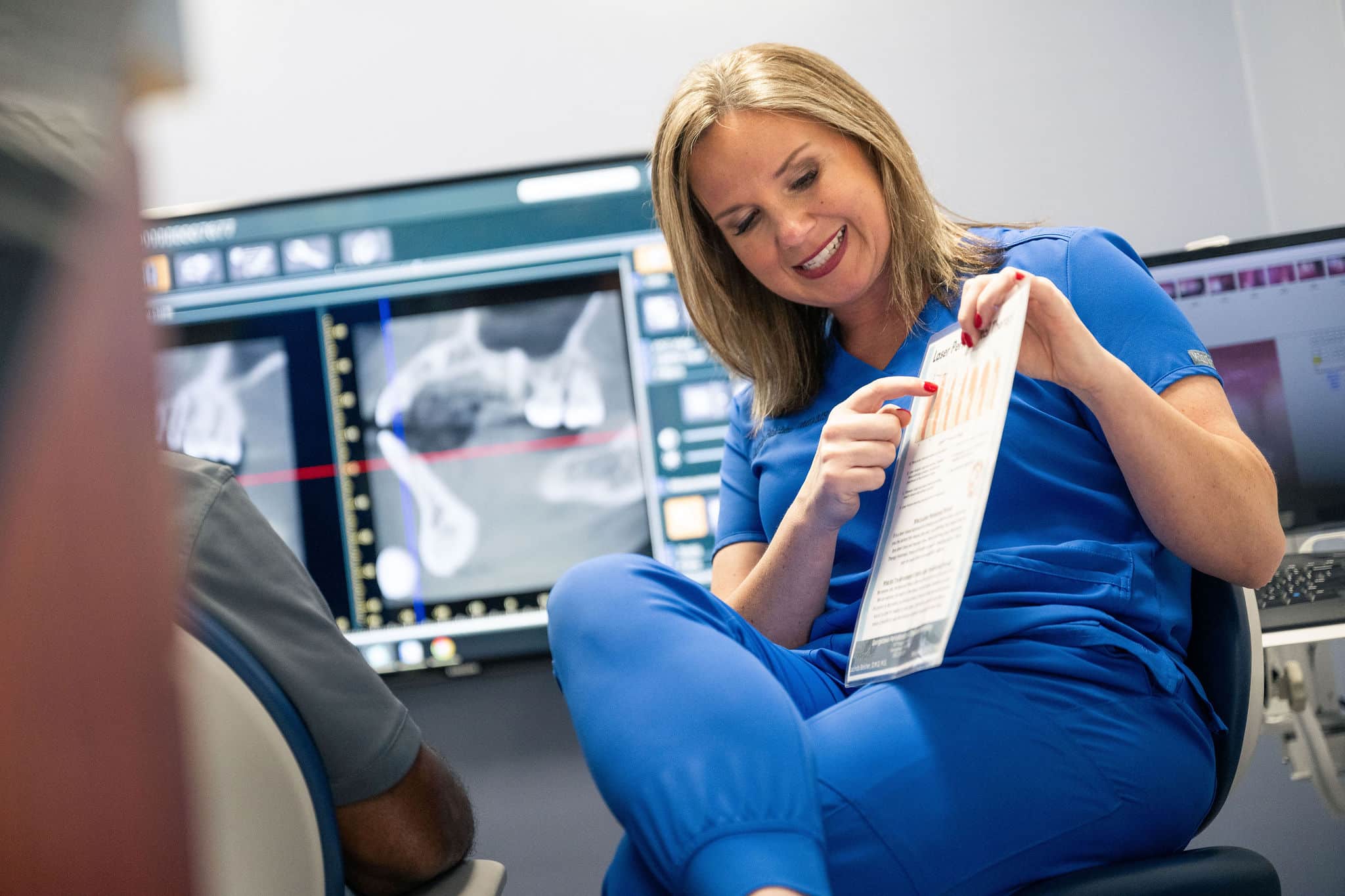
Everything we hear in consults — answered openly, the way we'd answer in person.
Common reasons include losing a tooth to injury or periodontal disease, a missing tooth that affects chewing or speaking, a visible gap in your smile, or an ill‑fitting denture or bridge. If any of those sound familiar, an implant is worth considering — but a periodontist should evaluate your oral health to confirm you're a good candidate.
Periodontists complete three additional years of specialty training beyond dental school, focused specifically on the gums and the bone that support your teeth — and on placing implants into that bone. Because implants live in your gums and bone (not in your teeth), a periodontist is the specialist trained for exactly this work.
Implants are a long‑term investment. Cost depends on the number of teeth replaced, the implant type, and the complexity of the case. They look and function like natural teeth, preserve the jawbone and adjacent teeth, improve chewing and speech, and help maintain the natural shape of your face — which is why most patients find the value clear over time. Our team will walk you through the tradeoffs honestly.
Coverage varies widely. Many dental plans don't fully cover implants (they're often considered cosmetic), but partial coverage for components like the crown or extraction is common. Some medical plans cover implants when tooth loss follows an accident or medical condition. Check with your carrier — and we're happy to review your benefits with you.
It begins with a comprehensive exam, imaging, and a treatment plan. Any necessary extractions or bone grafting happen first. The central step is surgical placement of the titanium implant into the bone. Osseointegration takes weeks to months — but in most cases you leave surgery day with a temporary tooth. Once healed, an abutment and a custom zirconia crown finish the restoration.
Surgery is performed under local anesthesia, and IV sedation is included with every full‑arch case. IV sedation keeps you deeply relaxed and drowsy — most patients have little or no memory of the procedure and describe it as a comfortable nap. If you'd prefer to be fully unconscious, we offer general anesthesia by a licensed CRNA as a $3,000 add‑on. Most patients report mild post‑op discomfort (swelling, bruising, soreness at the site) that's easily managed with over‑the‑counter pain relievers. The discomfort is almost always less than patients expect.
Lack of implant‑specific training or experience, pressure to decide quickly, unclear pricing or hidden costs, poor or evasive communication, and a track record of negative reviews. A trustworthy provider gives you time, shows you the full estimate, and explains the plan until every question is answered.
Twelve voucher spots remain this May. Claim yours in under sixty seconds — one of our patient coordinators will be in touch to schedule your free consultation and 3D CT scan.
Yes! Give Me My Voucher →